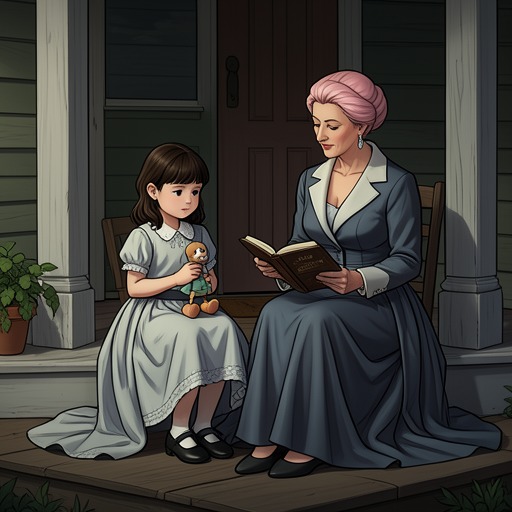
Lady Linda Farrier
The RookLady Linda Farrier is a senior figure in the Checquy Group whose composed manner conceals a relationship with Myfanwy Thomas that began years before the two consciously met. She is at once an official who helps direct Myfanwy’s recruitment as a child and a witness to the unsettling division between Myfanwy’s former identity and the person who wakes after her memory is lost. Her later insistence that a prophecy be tightly controlled places her personal authority within the organization’s wider machinery of secrecy.
Identity and First Recognition
As a child, Myfanwy repeatedly dreams of a formal woman in a room with black-and-white tiles. The woman listens patiently as Myfanwy recounts her life, including the hospital visit that revealed her unusual ability. The dreams make the stranger a familiar presence to the child, though Myfanwy does not yet know her identity.
Years later, after losing her memory, Myfanwy reads the account of her childhood and recognizes that Lady Farrier sounds like the woman in her own dreams. The black-and-white-tiled room matches as well. This recognition does not restore her memories, but it gives the earlier dream a new significance: the woman who had seemed to belong to an inaccessible past is also a real person tied to the institution now surrounding her.
The connection returns in a dreamlike encounter with an elderly woman dressed in Victorian clothes. Farrier thanks Myfanwy for removing a threat to her and her family, while acknowledging that she may owe Myfanwy a favor. But as she studies her visitor, gratitude gives way to alarm. She senses that Myfanwy’s mind has changed and struggles to reconcile the woman before her with Rook Thomas. Myfanwy explains that the former Myfanwy lost her memory and that she is what woke up; Farrier recognizes the bodily continuity while confronting the break in identity.
Recruitment and Childhood
Farrier’s first face-to-face meeting with the child Myfanwy takes place after a government letter prompts her father to bring her to an old stone building in the City. There, Farrier and Sir Henry Wattleman explain to Myfanwy’s father that the Checquy Group has the authority and the need to take the girl from her family and place her in its care. Myfanwy, only nine and a half, pays little attention to the explanation. Farrier is what holds her gaze: she seems strangely familiar.
The encounter also reveals the gap between Farrier’s calm official manner and the child’s emotional experience. Myfanwy realizes that she is going to live with the Checquy and breaks down crying. Farrier does not comfort her; she continues drinking tea and waits for the child to recover. Sir Henry, who has been moved by the distress of Myfanwy’s father, also leaves the child’s grief unanswered. When Myfanwy eventually turns her attention to the biscuits, Farrier gives a slight nod, permitting her to take one. The small gesture does not undo the separation, but it closes the immediate scene on the terms set by the adults.
The adult Myfanwy’s account identifies Farrier and Wattleman as the officials who made the recruitment decision in person. Frau Blümen later describes the child arriving at the Estate in tears, clinging to the driver’s hand and with chocolate on her face. In her recollection, Farrier had been the only person Myfanwy had left to rely on; Frau Blümen says that Myfanwy adored her, but that Farrier failed to recognize the attachment. This recollection complicates the image of the cool official: Farrier’s importance to the child was profound even when her manner gave little outward reassurance.
Authority and Institutional Decisions
Farrier’s role in Myfanwy’s recruitment is part of a larger process of evaluating and claiming exceptional children. Frau Blümen says Checquy had heard of Myfanwy’s ability before she arrived at the Estate and that she had concluded it was unlike any ability previously recorded in the British Isles. The organization’s leaders, Farrier and Wattleman, wanted to meet the child themselves and establish a personal connection that would make her loyal to them. In practice, their authority overwhelmed Myfanwy. Frau Blümen attributes the child’s trauma and failure to recover fully to this handling, while criticizing the leaders’ lack of skill with people.
Farrier is therefore associated with both the institution’s attention to Myfanwy’s potential and the personal cost of turning that attention into control. The evidence does not show Farrier independently assessing or training Myfanwy; rather, it places her among the senior officials who arranged the child’s transfer and sought to secure her allegiance. The contrast between the dream figure who patiently listened and the official who does not comfort the crying child remains unresolved, giving Myfanwy’s early attachment a mixture of intimacy and institutional distance.
The Prophecy and Secrecy
Years later, Farrier appears alongside Wattleman at a Checquy reception where Rupert Henderson demonstrates his clairvoyant ability. After Henderson confirms that the acquired creature is the one the organization sought, Wattleman announces that its revelations will be highly significant and must be kept secret. He says that he and Farrier, as heads of the organization, will be present when Henderson draws out the prophecy and will decide afterward which answers can be shared.
The announcement makes Farrier’s senior authority explicit: she is not merely present at an official gathering but is one of the two people empowered to oversee the revelation and restrict its circulation. The scene also shows that this control is contested. Bishop Grantchester responds with visible displeasure, and his strained assent does not erase the conflict over who should be trusted with the information. Farrier’s institutional position thus connects her to a recurring tension between collective responsibility and the concentration of secrets in the hands of the leadership.
That tension becomes personal when Henderson returns from the next room, visibly shaken, and declares that the creature has told him nothing. Farrier, behind him, looks as if she is about to be sick, while Wattleman holds his head in his hands. The two leaders’ reactions register the immediate shock of what has happened, but the evidence does not show Farrier taking a further action or explaining her response. Her presence anchors the moment in the leadership’s failed attempt to control a revelation whose outcome they had already decided to manage.
Characterization and Narrative Significance
Farrier is repeatedly defined by composure. As a child, Myfanwy remembers her as stiff and formal, yet patient enough to listen to every detail of a nine-year-old’s life. At the recruitment meeting, she remains unruffled even when Myfanwy drops and shatters a teacup. In the same encounter, however, her steadiness does not become comfort: she waits through the child’s sobbing rather than responding to it. The contrast makes restraint a consequential feature of her relationship with Myfanwy, not simply a mark of professional polish.
Her dream appearances bind that restraint to the novel’s treatment of memory and identity. Before the amnesiac Myfanwy can connect her present to her childhood, the dreams preserve Farrier and the tiled room as unexplained points of continuity. Later, Farrier’s recognition that the woman before her is not Rook Thomas and yet is Rook Thomas gives that discontinuity an external witness. Farrier cannot restore the lost identity, but her presence helps make the break legible: the body and name persist while the conscious person has changed.
Across these episodes, Farrier’s importance lies less in a fully explained private motive than in the positions she occupies: the woman remembered as a childhood confidante, the official involved in removing a gifted child from her family, and the leader entrusted with a secret prophecy. The distance between those positions keeps her characterization deliberately unresolved. Her calm can look like patience, detachment, or authority, depending on what Myfanwy needs from her and what the Checquy requires.